

Written and reviewed by Amelia Hill
Amelia is a university qualified Paediatric Nutritionist passionate about supporting families with trusted, evidence-based nutrition guidance. She also leads LittleOak’s healthcare education programme, helping share the latest insights in infant and children's nutrition.
Key takeaways
- Goat and cow milk have have different protein structures: Goat milk naturally contains A2 beta-casein, which forms softer, smaller curds during digestion when compared to A1 beta-casein. Potentially making goat milk easier for infants to tolerate.
- Goat milk naturally contains a unique nutritional profile: Differences in fat structure, protein composition, oligosaccharides, vitamins and minerals distinguish goat from cow milk.
- Oligosaccharides can support a healthy gut microbiome: Goat milk naturally contains a greater concentration and diversity of oligosaccharides than cow milk, some of which act as prebiotics to support beneficial gut bacteria.
Feeding can be complicated, stressful and overwhelming when deciding which path to take. Here at LittleOak, we support all feeding journeys and hope this blog can offer some insight into protein formats commonly used in infant formulas. To help you decide which formula is the best fit for your growing family if needed.
Naturally occurring nutrients found in goat milk
Fresh, whole goat milk has an abundance of natural goodness, goodness that made the decision in choosing goat milk as LittleOak’s base, an easy one.
- Protein: Goat milk contains A2 proteins, not A1 proteins. A2 proteins are known to form softer and smaller curds during the digestion process. These smaller curds can be easier for an infant’s immature digestive system to break down.
- Fats: Goat milk has smaller fat globules and a higher concentration of medium chain fatty acids (MCTs), allowing them to cover a larger surface area for digestive enzymes to infiltrate. More enzymes equals quicker digestion.
- Vitamins: Goat milk naturally offers higher levels of vitamin A and vitamin B6 when compared to cow milk.
- Minerals: Compared to cow milk, goat milk naturally contains higher levels of calcium, magnesium, potassium and phosphorus.
- Prebiotics: Goat milk naturally contains higher concentrations and diversity of oligosaccharides, prebiotic fibres, when compared to cow milk.
The significant differences between goat and cow milk
There are many differences between goat and cow milk. Most of which we can put down to their structures. The four main differences include:
Protein structure
Probably the most notable difference between the two milks, goat and cow milk possess differing proportions and structures of milk proteins, especially what we call caseins. These caseins are more commonly known as A1 and A2 proteins which you’ve probably heard of. Goat and cow milk have different proportions of A1 and A2 proteins, with A1 being found in most conventional cow’s milks but not present at all in goat milk. Goat milk contains only A2 proteins, so, what’s the difference, why does A1 vs A2 actually matter?
| A1 Protein | A2 Protein | |
|---|---|---|
| Naturally found in | Conventional cow's milk | Goat's and cow's milk |
| Structure | Differs from A2 by a single amino acid at position 67 | Differs from A1 by a single amino acid at position 67 |
| Digestion | Firmer, larger curds formed during digestion when compared to A2 | Softer, smaller curds formed during digestion when compared to A1 |
| Tolerance | Varies individually, however may be harder to tolerate due to more effort required in the break down of harder, larger curds | Varies individually, however may be easier to tolerate due to softer and smaller curds being easier to break down. |
Fat composition
The fat in goat milk naturally has a different structure and composition from cow milk, including its smaller fat globules. Smaller fat globules can be easier and faster to digest than the larger globules found in cow milk, which can make goat milk more gentle on little tummies.
Oligosaccharides
Oligosaccharides are small chains of sugars that are naturally found in milk. Different types of milk contain different types and amounts of oligosaccharides. For example, human breast milk is considered the gold standard for oligosaccharide concentration and diversity. Goat’s milk is considered second to human breast milk, containing roughly 10 times more oligosaccharides than cow’s milk. The reason we care so much about oligosaccharides is because some can act as a prebiotic, meaning they feed the good bacteria in our gut. Take a read of our white paper to read more about goat milk, oligosaccharides and infant gut health.
Mineral composition
Goat milk contains naturally higher concentrations of vitamins and minerals such as vitamin A, calcium, potassium and phosphorus when compared to cow milk. Vitamin A is essential for infants as it supports healthy vision, immunity and aids proper organ development. Calcium is essential for our babies to build strong bones, teeth, muscle and heart functions. Potassium helps infants maintain their fluid balance as a vital electrolyte. Lastly, phosphorus in babies supports normal growth and development as well as helps energy levels.
Prebiotics
Prebiotics are plant fibres and carbohydrates which are indigestible by the human body. Unlike the carbohydrates you may be familiar with, prebiotics do not break down, nor are they absorbed by the body. Instead, they travel to the large intestine where they act as food for the gut microbiome, fermenting amongst the bacteria, helping them thrive.
If we talk about the gut microbiome as a garden, let’s think about prebiotics as the fertiliser. The microbiota that grow can shape a child’s immunity, metabolism and brain development. Learn more about pre and probiotics here.
The unique fat structure of goat milk
Fat structure is another key difference between goat and cow milk. Goat milk naturally contains smaller milk fat globules and a different fatty acid profile comparatively to cow’s milk. These structural differences can influence how goat milk fat is broken down during digestion. Smaller fat globules, like those found in goat milk, provide a greater surface area for digestive enzymes to act upon. This may support a more efficient digestion.
From the goat to the LittleOak can
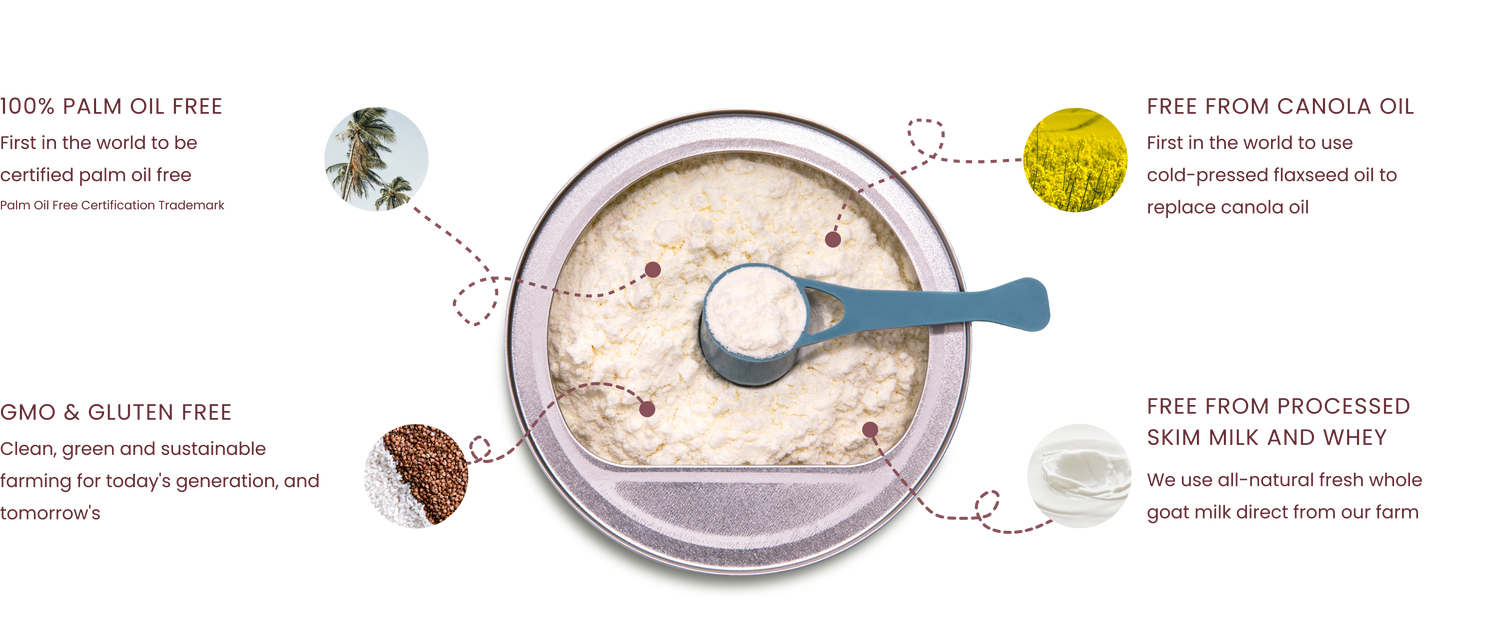
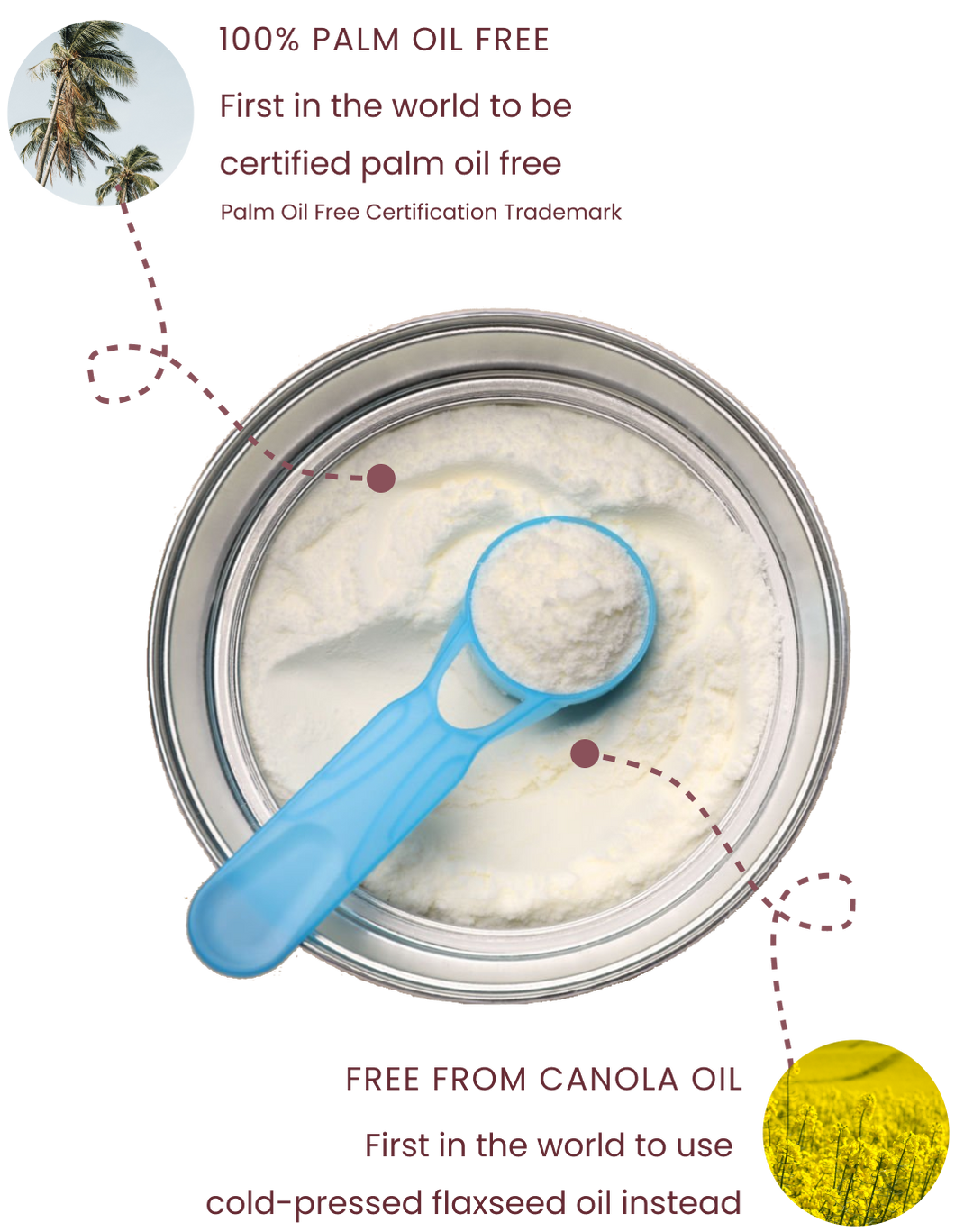
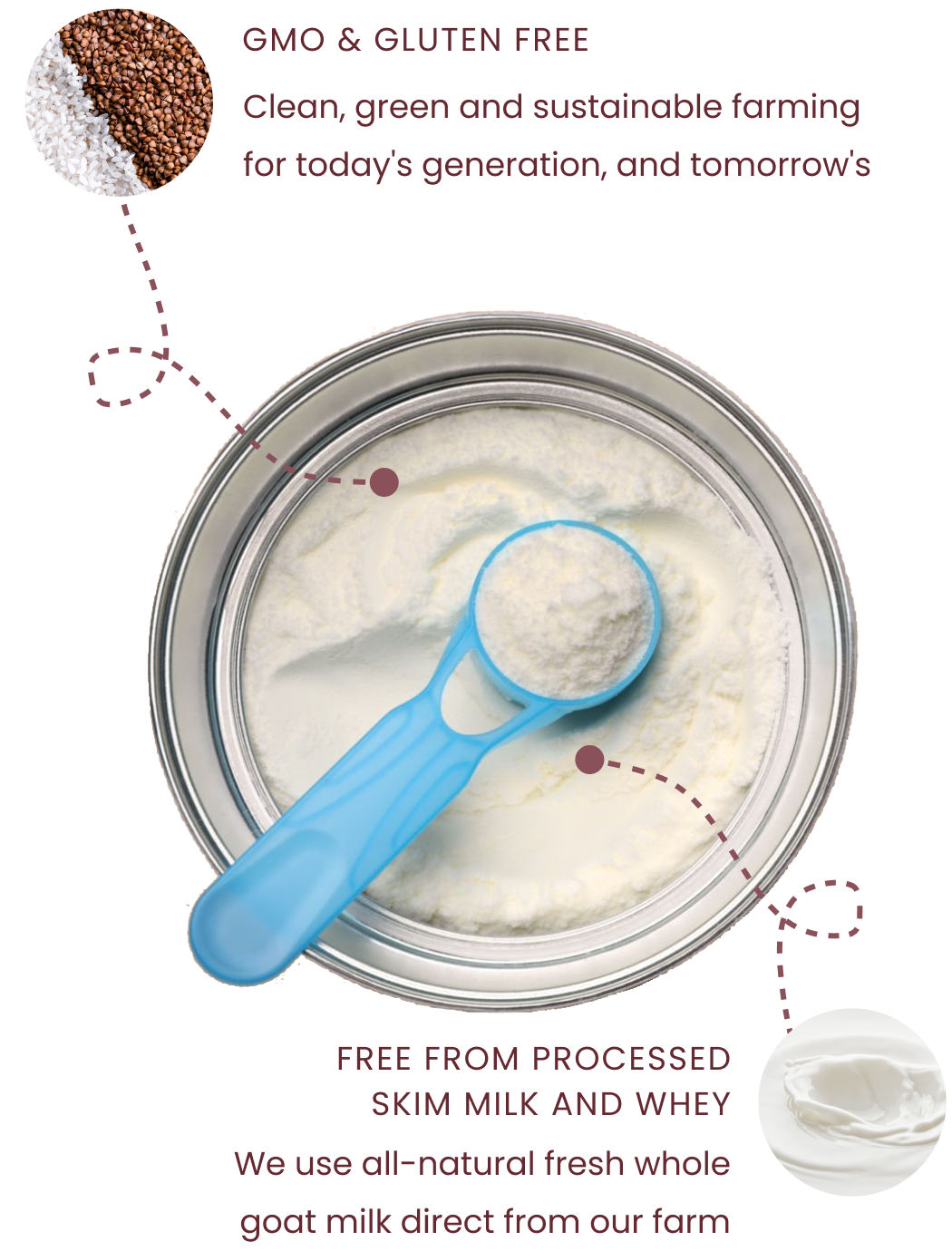
LittleOak starts from fresh whole goat milk. This ensures that our LittleOak families are receiving much of the natural goodness goat milk has to offer. Every LittleOak can starts with almost 3 litres of fresh whole goat milk instead of heavily heat-treated milk powders. Our milk is gently spray dried only once to preserve as many of the natural nutrients. The high heat exposure used when spray drying formula intended milk, more than once, can contribute to:
- Denaturation of proteins: Excess heat can denature proteins which means changing their natural structure and stopping them from doing their intended job.
- Disruption of milk fat globules: Milk fat is naturally contained in little structures called globules. Excess heat can alter these structures, possibly affecting their nutritional value. There is emerging research showing how important these milk fat globule membranes are for neurological development and health so we do not want them disrupted.